


When you’re choosing a school, you read a lot of lists — subjects, facilities, timings. But what a parent really wants to know is simpler and harder to put on paper: what will my child’s day actually feel like? So let’s put the brochure aside and walk through an ordinary day at Sree Sree, from the first bell to the last wave goodbye.
8:30 — The gates open
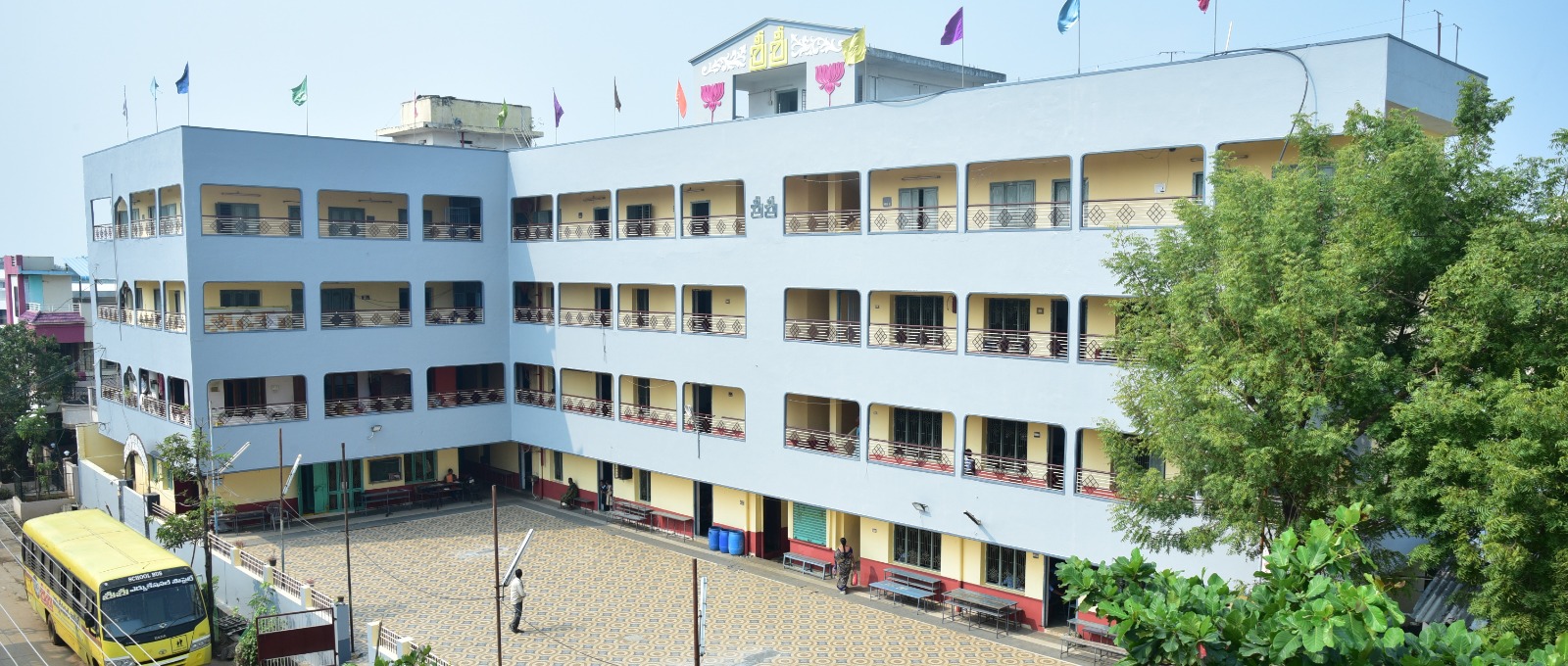
The morning begins with a flood of colour and noise — cycles, autos, parents on scooters, the squeak of new shoes. There are shouted hellos across the compound and the serious business of comparing tiffin boxes. A watchful teacher stands at the gate, not to police anyone, but because a familiar face and a “good morning, beta” is a nice way to start a day.
8:50 — Assembly and a quiet beginning
We gather for assembly — a thought for the day, a few announcements, sometimes a student nervously reading out something they wrote. And then the part we hold dear: a few minutes of yoga and pranayama. The whole school breathes together. By the time the children file off to class, the morning’s edges have softened.
9:15 — Into the classrooms
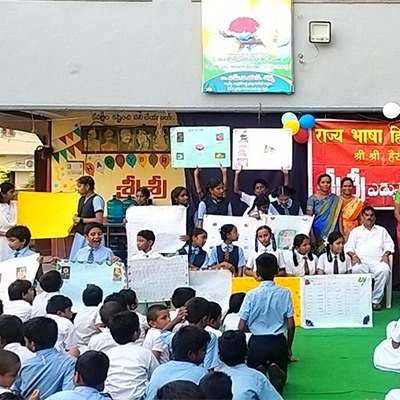
Now the real work begins. In the primary wing, learning is loud and hands-on — counting with beads, acting out a story, a wall slowly filling with the children’s own drawings. Upstairs, the older students settle into the steadier rhythm of high school: a maths problem worried over together, a science idea that suddenly clicks, a debate that runs a minute past the bell because no one wants to stop.
Between it all, teachers move around the room, kneeling by desks, catching the child who’s gone quiet, stretching the one who’s racing ahead. This is the part that never fits on a facilities list: a teacher who knows your child by name and by nature.
11:00 — The interval (a.k.a. the best part)
Ask any child and they’ll tell you the truth: interval is the heart of the day. The playground fills in seconds. There’s cricket with impossibly complicated local rules, a knot of girls skipping, a quiet pair on the steps sharing one packet of biscuits. A lot of growing up happens in these twenty minutes — how to win kindly, how to lose without sulking, how to include the new kid.
We take the playground as seriously as the classroom. Some of the most important lessons a child learns all year are never once written on a blackboard.
11:20 — Back to learning, and something extra
The later morning often makes room for the things that make school more than a syllabus — a computer lab session, an art or music class, or one of our co-curricular activities like chess, karate or robotics. You can watch a child who is ordinary at their desk come completely alive with a chessboard or a keyboard in front of them. We live for those moments.
1:00 — Lunch, together
Tiffin boxes click open and the smell of home fills the room — curd rice, a paratha folded by an early-morning mother, the lucky child with a sweet to share. We encourage sharing, and we notice the child who has forgotten their box. Nobody eats alone here if we can help it.
The afternoon — winding down
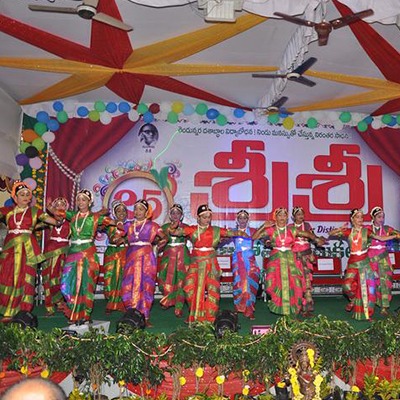
The afternoon has a gentler pace: revision, reading, group work, the day’s loose ends tied up. On festival weeks the whole rhythm happily breaks — Independence Day rehearsals, Sankranti colours, a hum of practice for the annual day. These are the days the children remember years later.
3:30 — The last bell
And then it’s over as suddenly as it began. Bags are hoisted, a forgotten water bottle is retrieved, a teacher calls out a reminder about homework that half of them won’t hear. At the gate there are waves and the day’s stories already spilling out to waiting parents.
That’s a day at Sree Sree — not extraordinary, just good, the kind of day that quietly stacks up into a childhood. If you’d like to see one for yourself, our gates are open. Come and visit us in Eluru.