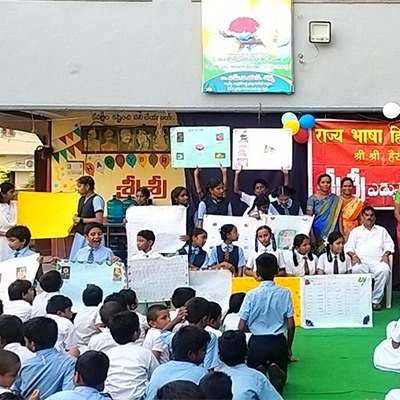


If you walked into our school a little before the first class, you might be surprised by how quiet it is. Not the tense quiet of an exam hall — the settled kind. Rows of children sitting cross-legged, eyes closed, breathing slowly in and out together. For about twenty minutes, before a single textbook is opened, we simply breathe.
Some visitors ask us, gently, whether that isn’t twenty minutes we could spend on the syllabus. It’s a fair question. Here’s our honest answer: those twenty minutes make the other five hours work.
What breathing actually does for a child
Children arrive at school carrying a lot — a rushed breakfast, a scolding in the auto, worry about a test, the general electricity of being young. You can’t teach a mind that’s still buzzing. Pranayama, the practice of slow, conscious breathing, is a remarkably simple way to let that buzz settle.
We’re not making grand claims. We just watch what happens. After yoga, the children walk into class a little calmer, a little more present. Hands stop fidgeting. Eyes focus. The morning’s first lesson lands on soil that’s actually ready to receive it.
A boy who couldn’t sit still
A few years ago we had a bright, restless boy — the kind who was always half out of his chair, always talking. His parents were at their wits’ end. Nothing we tried in the classroom held him for long.
What eventually helped wasn’t a stricter rule. It was the morning breathing. Slowly, over weeks, he learned that he could feel that restless energy rising and let it out with a long exhale instead of a shout. He didn’t become a quiet child — we wouldn’t have wanted that. He became a boy who could choose when to be still. That is a gift that outlasts any school.
We’re not trying to make children calm so they’re easier to manage. We’re teaching them to manage themselves — a skill they’ll use long after they’ve forgotten their timetables.
Calm children are kinder children
Here’s the part we didn’t expect when we began. The biggest change wasn’t in test scores — though focus certainly helps those. It was in how the children treat each other. A child who isn’t agitated has room to be patient, to share, to notice when a friend is upset. Much of what we hope to teach about values and ethics grows far more easily in a calm classroom than a chaotic one.
You can try a little of this at home
You don’t need a yoga mat or an hour to spare. If your mornings are a scramble, try this together before school:
- Sit comfortably and take five slow breaths — in through the nose, out gently through the mouth.
- Breathe in for a count of four, hold for two, and let it out for a count of six.
- Ask your child one small thing they’re looking forward to today.
Two minutes. It won’t fix everything, but it changes the tone of the day — and children notice.
Why we protect these twenty minutes
Every year the syllabus grows and the days feel fuller. It would be easy to quietly drop the morning practice to buy back some time. We won’t. Yoga and Pranayama have been part of Sree Sree since the beginning — our founder built the school on the belief that a child’s mind, body and spirit have to grow together. Decades later, watching our students, we’re more convinced than ever that he was right.
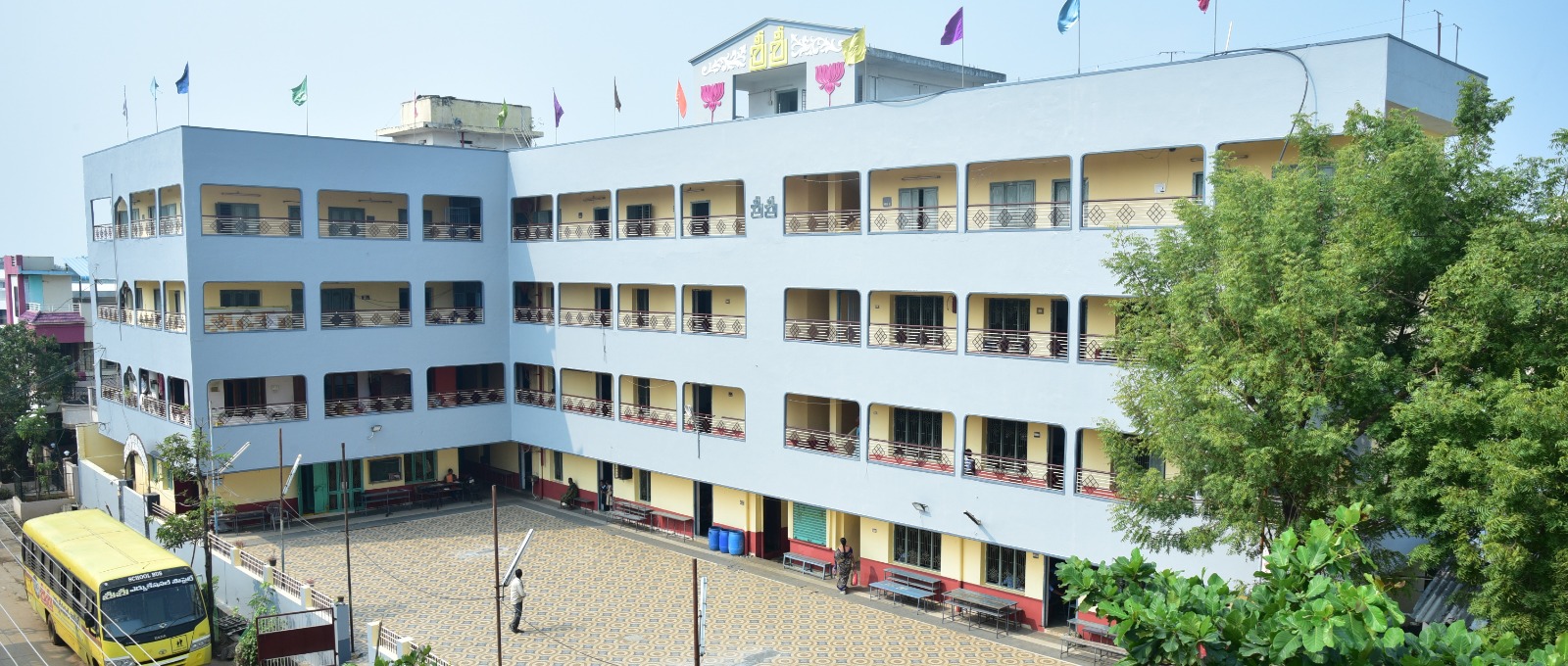
If you’d like your child to start their days this way, we’d love to show you around. Come see a morning at Sree Sree Educational Society in Eluru — the quiet part is our favourite. Get in touch to visit.