


Every school in Eluru will tell you your child is safe with them. We would tell you the same thing, and we’d mean it. But “your child is safe here” is a sentence, not a system, and you have no way of telling the difference from the outside.
So here are twelve questions that do reveal the difference. They’re not confrontational and you shouldn’t feel awkward asking them — any school worth your child will be glad you did. What matters is not the answer itself but whether the answer is specific.
At the gate and at pick-up time
Start here, because dispersal is where most school safety failures actually happen. Not in classrooms. At the gate, at 3:30, in a crowd.
1. Who can collect my child, and how do you check?
You want a named-and-recorded system, not recognition. “We know the parents” works until the day there’s a substitute at the gate.
2. What happens if someone unfamiliar comes for my child?
The right answer involves the school phoning you before releasing the child. Any answer that ends with the child leaving is the wrong answer.
3. Who supervises the gate at dispersal?
There should be a named adult, present, every day. Not “the watchman is around”.
4. What if I’m late?
Where does your child wait, and with whom? A child waiting alone outside a gate for twenty minutes is the situation you are trying to prevent.
Medical and emergency
5. What happens in the first ten minutes of a medical emergency?
Listen for a sequence: who assesses, who calls you, which hospital, who accompanies the child. A school that has thought about it will describe steps. A school that hasn’t will say “we take care of it”.
6. Who on campus is trained in first aid?
You’re looking for people, not a cupboard. A well-stocked first aid box with nobody trained to use it is decoration.
7. How will I be contacted?
Directly, by phone, immediately — not through a note in the diary that you’ll read at 5 PM. Ask specifically who calls and how quickly.
Bullying and how children are treated
8. What is your process when a child is bullied?
The word to listen for is process. Who does a child report to? Is it written down? What happens in 24 hours? Are both sets of parents told?
And be wary of the school that tells you bullying doesn’t happen there. Bullying happens everywhere children gather. A school that claims otherwise either isn’t looking or won’t admit what it finds.
9. Who can a child talk to if they’re upset about a teacher?
This is an uncomfortable question and that is exactly why it’s useful. A good school has an answer — a named adult who isn’t the class teacher. A school that bristles at the question has told you something.
10. What is your position on physical punishment?
It is illegal in India, so the only acceptable answer is a flat no. Watch how it’s said. A school where it genuinely doesn’t happen answers immediately and without qualification. Hesitation, or a joke, or “only when absolutely necessary”, is your answer.
Staff and supervision
11. Are staff background-verified, including support staff?
Teachers are the easy part. Ask about drivers, cleaning staff, security, anyone who is around children without being a teacher. That is where verification is most often skipped.
12. Is a child ever alone with one adult behind a closed door?
The safeguarding standard is the two-adult rule, or at minimum visibility — an open door, a window, a corridor with people in it. A school that has thought seriously about child protection will know immediately what you’re asking and will have a policy. A school that hasn’t will look puzzled, and that puzzlement is the most important information you’ll gather all day.
You are not looking for a school with no incidents. Every school has incidents. You are looking for a school that notices them, writes them down, tells you, and changes something afterward.
Two things to watch that you can’t ask about
Some of the best safety information on a school visit isn’t in any answer.
Watch a child approach a teacher. Do they walk up easily, or hesitate? Children in a safe school approach adults without calculating. That single observation tells you more than the whole safety policy.
Look at the floors, stairs and playground. Are the stairs dry? Is there a handrail? Is the play equipment sound? Most childhood injuries at school are ordinary ones — slips, falls, sharp edges — and a school that manages those well is usually careful about everything else. In Eluru during the monsoon especially, wet floors cause more harm than anything dramatic.
What you should tell the school
Safety runs both ways, and schools can only act on what they know. Please tell us:
- Any allergy, medical condition or medication — in writing, not verbally at the gate
- Two working phone numbers, updated when they change
- Exactly who is authorised to collect your child
- Any family situation we should handle sensitively — custody arrangements, a bereavement, anything a child might be carrying
That last one matters more than parents realise. A teacher who knows a child’s grandmother died last week treats that child differently, and better.
How we approach it
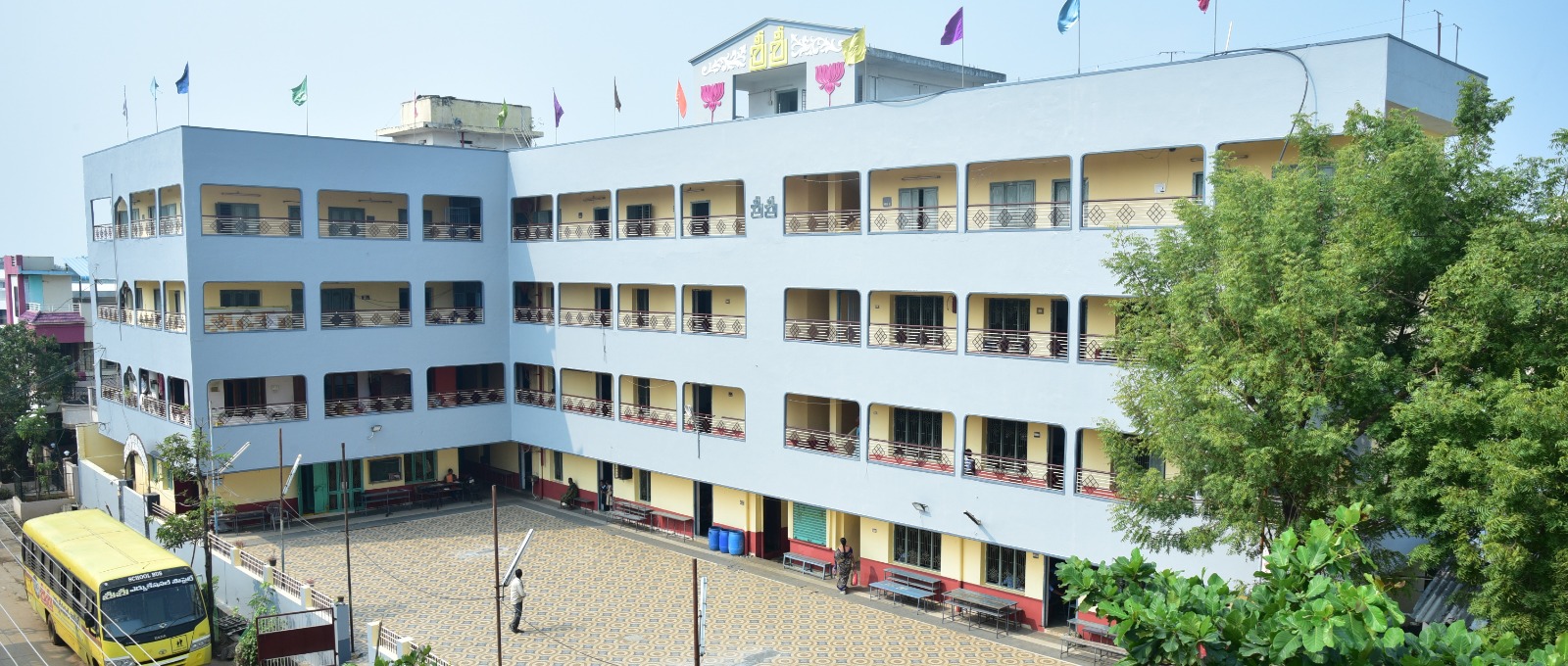
Our campus is supervised through the day, dispersal is controlled rather than left to the crowd, and if something happens to your child you will hear it from us by phone, that day, from a person — not in a note you find at bedtime.
We’d also rather you asked these twelve questions of us in person than took our word for it here. Come on any working day between 9 and 5, and ask. Get in touch to arrange a visit, or read our fuller guide to choosing a school in Eluru.