



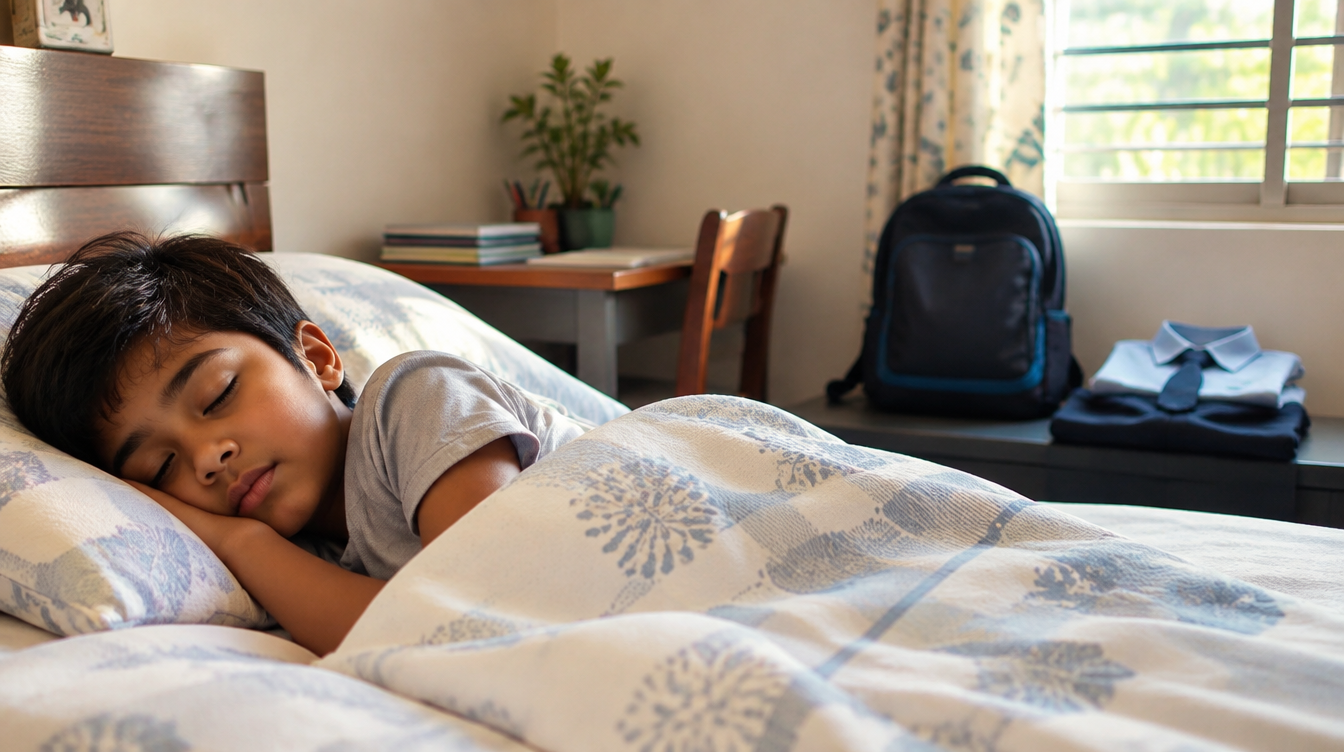
When exams are near, the first thing many families trim is sleep. One more hour of study, a late night with the textbook, an early alarm for revision. It feels responsible. Unfortunately, it often does the opposite.
Sleep isn’t time away from learning. It is when much of the learning actually gets stored. Here’s why it deserves a firm place in your child’s day.
What sleep does for a learning brain
During sleep, the brain sorts what a child has seen and practised during the day and files it into long-term memory. A well-rested child concentrates longer, picks up new ideas faster and manages feelings better. A tired child forgets, fidgets, and gets upset over small things — which is easy to mistake for “not trying”.
How much do children need?
Needs vary, but as a rough guide, primary-age children do best with around nine to eleven hours a night, and older children and teenagers with eight to ten. If your child is hard to wake in the morning, nods off in the car or is cranky by evening, they are probably short on sleep.
Simple habits that help
- Same time, every night. A steady bedtime and wake time, even on weekends, sets the body clock.
- Screens off an hour before bed. The light and excitement keep minds switched on. Our guide to screen-time rules that work can help.
- A calm wind-down. A bath, a story, a few quiet minutes of talk.
- Dinner not too late, and not too heavy.
- A dark, cool, quiet room.
A rested child with an hour less study will often outperform a tired child who studied longer.
During exam weeks
Protect bedtime even more, not less. Move study earlier in the evening, keep revision short and focused, and let the last hour before sleep be easy. If you’re planning ahead, our exam preparation plan is built around this idea.
A word on morning routines
Good sleep makes mornings easier, and a calm start sets up the whole school day. This is one reason we value things like morning yoga at school. If you’d like to talk to us about your child’s daily rhythm, get in touch.