

Parents put enormous care into choosing a high school and comparatively little into choosing a primary school. We understand why — Grade 10 has a public result attached to it, and Grade 2 doesn’t.
But if you asked us which five years matter most, we’d say Grades I to V without hesitation. This is where a child decides, quietly and more or less permanently, whether learning is something they can do. Everything after that is built on that decision.
What these five years are really building
The syllabus at this stage is not the point. Any competent school will get through the textbook. What separates a good primary school from an adequate one is what it builds underneath.
- Fluent reading by Grade 3. This is the single most important milestone in primary school. A child who is still decoding words at Grade 4 will struggle in every subject, because from that point on all learning happens through reading.
- Number sense, not memorised tables. A child who can recite the seven-times table but cannot work out what seven fours might be has learned a song, not mathematics.
- The belief that they can figure things out. Watch how a school handles a wrong answer. That moment, repeated a thousand times, is what produces either a confident child or a cautious one.
- Ordinary daily habits. Coming on time, finishing what you started, putting things back, telling the truth when it’s inconvenient. These are taught in the primary years or not at all.
What to look for when you visit
Go on an ordinary Wednesday, not an admission day. Everyone performs on admission days. Here is what actually tells you something:
How the teacher handles a wrong answer
Stand near a primary classroom and wait for a child to get something wrong. It won’t take long. What happens next is the most informative thirty seconds of your visit. Is the child helped toward the answer, or corrected and moved past? Does the class laugh, and is that allowed?
How many children are in the room
Ask for the actual strength of the class your child would join, not the school average. Around thirty lets a teacher know a child. Beyond forty, teaching becomes broadcasting — the teacher is doing their best, but they cannot see your particular child.
Whether there is noise
A completely silent primary school is not a good sign. Seven-year-olds who are engaged are audible. What you want is purposeful noise, not chaos and not silence.
What happens at 11 AM
Is there a break where children actually run about? Do they get outside? Primary children need physical play the way they need food, and a school that has quietly eliminated it to gain teaching time has misunderstood how young children work.
Whether anyone knows your child’s name
If you already have a child there, this is the test. If not, ask the teacher to describe a current student to you. A teacher who knows children will light up and tell you a story. One who doesn’t will describe marks.
Ask one question at every school you visit: “What do you do when a child falls behind?” A good school has an actual answer, with steps in it. A weak school recommends tuition.
The things that don’t matter as much as you think
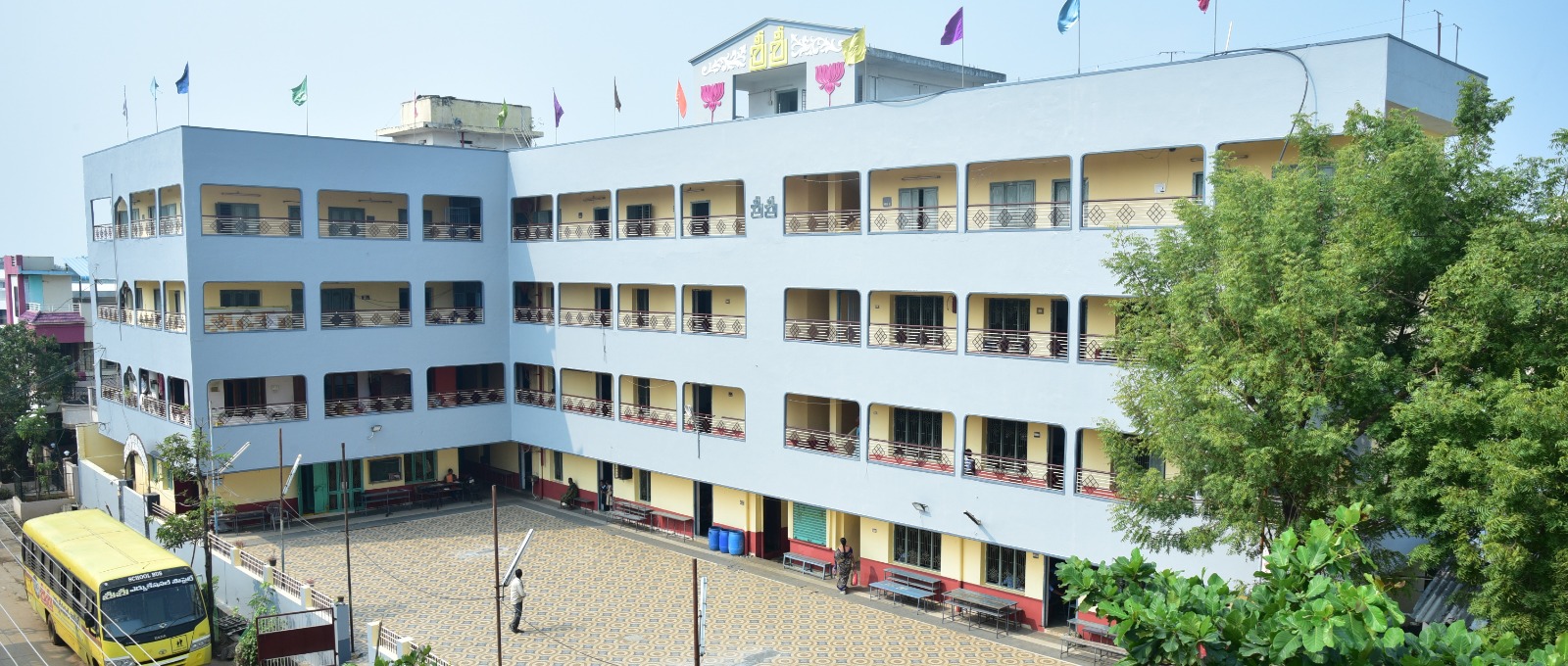
We’d gently suggest weighting these lower than the brochure does: air-conditioned classrooms, a smart board in every room, the number of buses, and the size of the building. None of them are bad. None of them teach your child to read.
What matters far more, and photographs far worse: how long the teachers have been there. A primary school where the same teachers have taught for a decade is a school where children are known. A school with a new set of faces every June has a problem it will not mention on the tour.
How we approach the primary years
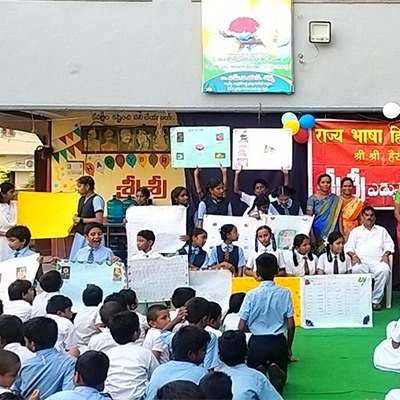
Our primary school runs Grade I to V, and we teach it with a fairly simple conviction: young children learn by doing, so we keep them doing. Storytelling, hands-on activity, things they build and touch, and a great deal of talking out loud.
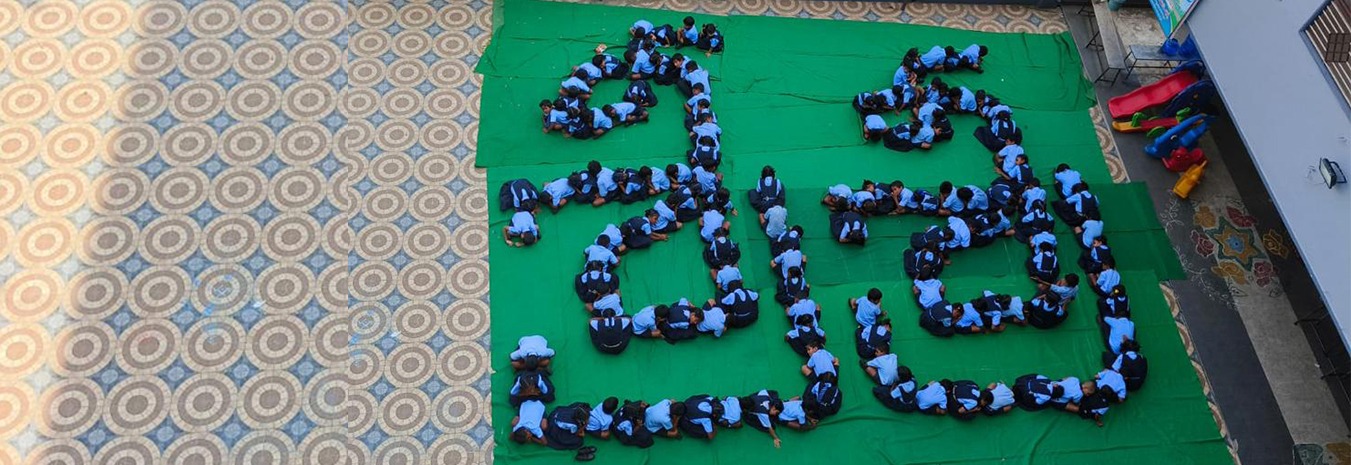
Alongside that, every child’s day starts with yoga and pranayama, which settles a room of eight-year-olds better than any instruction we’ve found. There are values classes, because character is easiest to build at this age. There is real playtime, chess, karate and the beginnings of robotics. And there is a playground that gets properly used.
We also try to make sure someone knows your child. That sounds modest, but it is the thing parents thank us for years later — not the syllabus.
A word about starting age and readiness
Parents often worry that their child isn’t “ready” for Grade 1. Almost always, the anxiety is about academics — can she write her letters, does he know his numbers. Those are the easy part, and school will handle them.
What actually helps a child settle into Grade 1 is different: being able to sit for a stretch, ask for help, use the toilet independently, eat their own lunch, and manage a few hours away from home. Our post on preparing your child for the first day goes through this properly.
Frequently asked questions
What should a good primary school teach?
Fluent reading by around Grade 3, number sense rather than rote tables, curiosity through hands-on work, and everyday habits of honesty and routine — alongside real physical play, art and music, which at this age are not extras.
How many students should be in a primary class?
Around thirty allows a teacher to know each child. Beyond forty, teaching becomes broadcast. Ask for the strength of the specific class your child would join.
Which grades does primary school cover in Andhra Pradesh?
Grade I to Grade V. Sree Sree Educational Society offers Primary (I–V) and High School (VI–X) — see our academics page.
Looking at primary schools in Eluru right now? Come and see an ordinary school day at our Sanivarapupeta campus. Book a visit here or call 08812-244084.